
I will start this piece with a confession, an admission that I got something wrong l’hitvadot (לְהִתְוַדּוֹת), I was under the mistaken impression that one of the Co-Leaders of the Movement for Progressive Judaism in Britain, the umbrella organisation that encompasses the UK Reform and UK Liberal Jewish congregations, was much more dogmatically to the Left than she actually is.
I’m very pleased to report that I was wrong and she has shown that she can see beyond ideological labels. I’m pleased to see it because it represents the proper definition of one aspect of liberal thought, that of the free exchange of ideas and the willingness to be persuaded to change one’s views via rational argument. I’m also pleased to see this because I am a politically Right leaning non-Orthodox Jew. Being what I am and holding the political views I have, I’ve sometimes felt excluded from communal life. I’ve felt excluded on too many occasions from communal activities because some communities have governing bodies dominated by the mores of the political Left and are hostile to any challenge to their dogma. An organisation that is properly open minded or liberal should not behave like this.
I must admit that to hear a Rabbi of this person’s high standing saying that she felt comfortable among conservatives in some way gives me permission to speak up and more importantly have a chance of being heard. Baruch Hashem for her words.
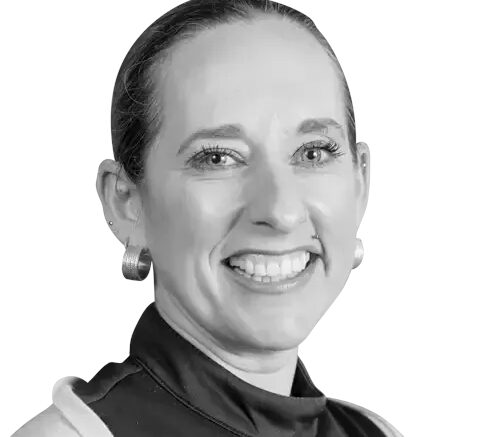
But I digress. This post is primarily to praise and promote the words of Rabbi Charley Baginsky
Rabbi Charley Baginsky, co-lead of the Movement for Progressive Judaism has written a really excellent piece about her experiences at the various party conferences. Rabbi Baginsky attended the Labour, Green and Conservative Party conferences. She wrote down her impressions of each. Her experience seems to match mine in some respects. I’ve found only conditional acceptance or rejection on the Left, especially when I’ve exercised my right to free speech and challenged dogma, but have found considerably more acceptance and a more balanced world-view on the Right. This is what I take from Rabbi Baginsky’s article. I also take from this article that one of the traditional political homes for Britain’s non-Orthodox Jews, the Labour Party is a home no more.
Anyway. Enough of me, here’s the full text of Rabbi Charley Baginsky’s excellent article from her Substack. It only remains to say that for this article, if I ever run into Rabbi Baginsky at a Jewish event, I’ll buy her a drink and say to her Kol Hakavod.
The direct link to Rabbi Baginsky’s piece is: https://charleybaginsky208804.substack.com/p/what-beruriah-heard
Here’s the full text.
“Rabbi Meir had had enough of his neighbours. They were making his life miserable, and he prayed for them to die. His wife, Beruriah, challenged him. Was he relying on the verse in Psalm 104, Yitamu chata’im min ha’aretz? Read it again, she told him. She understood it to mean that sins should disappear from the earth; he was praying for the disappearance of sinners. Continue to the rest of the verse: “and the wicked will be no more”. Pray for them to repent. Meir listened, changed his prayer, and the Talmud tells us that his neighbours repented.
I would have liked to hear that conversation. Meir has the grievance, the authority and, he believes, the text. Beruriah knows the text too. The story is about repentance, but I find myself thinking about the moment before anyone repents, when she tells him that the words do not authorise what he wants them to authorise. Being a rabbi does not protect him from getting it wrong. His Judaism requires him to hear her.
I have been thinking about that after attending Labour, Green and Conservative party conferences, and about how readily I would hear a challenge once I had convinced myself that my own position was Jewishly justified. I went into those rooms knowing why I was there. I came away thinking rather more about what being there asks of me, especially when the wish to belong, or the relief of being welcomed, begins to influence what I am willing to say.
I had been warned about the exhaustion of conference season, although apparently not convincingly enough to abandon the heels. They do at least allow this five-footer to see the front. As the hours standing accumulate, I begin to question whether seeing the front is really necessary! At Labour, we arrived on Monday afternoon and went straight into an event, beginning days of meetings with journalists, politicians, faith leaders and civil society colleagues that continued well into the evenings. Conversations about antisemitism sat alongside discussions about foreign policy, racism and the society people wanted to build. Sometimes Jewish experience was part of those discussions; sometimes it needed someone there to bring it in.
People ask why a rabbi attends political conferences. My role as Co-Lead of the Movement for Progressive Judaism is part of the answer, but I would have trouble explaining my absence in religious terms too. Torah concerns itself with wages, debt, land, courts and who gets to eat. Paying a worker on time requires an employer to attend to someone else’s need. Leaving part of a harvest for those who need it limits what we can claim as entirely our own. I cannot teach those texts and then suggest that decisions about how we live together are somebody else’s business.
As Progressive Jews, we need to take our place in those decisions. Yet taking my place means bringing commitments that will sometimes make me inconvenient. Protecting Jewish life, responding to suffering beyond our community and taking responsibility for what attachment to Israel asks of us do not change with the room we enter. I know how much easier a conversation can feel when there is broad agreement. The question is whether I am prepared to disturb that agreement when something needs to be said.
I went to Green conference a a chance to hear from Jewish Greens. I knew what they were facing, but the eventual decision was still appalling. The motion declaring “Zionism is racism” is antisemitic and should be withdrawn. It imposes a definition of Jewish attachment to Israel that makes much of ordinary Jewish life suspect. Palestinian dignity, freedom and safety require urgent political work. Declaring Jewish self-definition racist does nothing to advance them. A party cannot establish the justice of its policy simply by insisting on the justice of its intentions.
Reading Andrée Frieze’s interview in The Times, I found myself thinking about Jerusalem. I was her rabbi for fifteen years and celebrated her child’s b’mitzvah at Beit Shmuel, a centre for Progressive Judaism looking out over the Old City. Her child is now 22. I had shared a moment of joy with this family, years before Andrée would have to explain publicly why their relationship with Israel did not make her a racist.
She had joined the Greens inspired by women working for environmental and social justice, and became one of those women herself. At conference she led a session about faith and the environment, describing an enthusiastic gathering of people from different faiths and none. Days later, she was leaving the party she had belonged to for nearly fifteen years, saying goodbye to colleagues and removing herself from WhatsApp groups and the forums where she had spent years contributing. It was the leaving of those groups that hurt to read. You may know that leaving is necessary and still care about the people, still believe in the work, still grieve the future you thought you were helping to build.
Andrée also described considering who was listening before mentioning that her husband was Israeli and that she had family there. That calculation was happening long before the vote. I thought about the distance between the Jewish life I knew and the account of herself she felt able to offer among her colleagues. There is something deeply wrong when belonging requires that kind of omission, when people who know your work and share your commitments cannot be trusted with an ordinary fact about your family.
“I am a Zionist, I am not a racist,” she said. Her account of Rosh Hashanah in Israel contains anger about Netanyahu, the West Bank and Gaza, alongside the story of her brother-in-law, who survived 7 October because he remained in a safe room looking after his grandchildren rather than taking his usual walk. His neighbours were murdered. I recognise the family life she describes, in which grief, love and disagreement are present at the same table. Attachment can make the questions about Israel harder, because the answers concern people you love. It can make the need for peace painfully immediate.
But she should not have to offer that account as evidence for the defence. Her family’s suffering is not what makes her right about the motion. Nor should her criticism of Netanyahu be the qualification that earns her a hearing. She and others spent years explaining the antisemitism they were encountering. The party adopted the policy anyway.
At Conservative conference, particularly around Conservative Friends of Israel, I was moved by the confidence with which people spoke about Jews and Israel. I felt grateful, and sad about how much of a relief it was. I had not expected to feel so grateful, and I am still thinking about what that tells me. It matters that I felt able to be there without defending something so fundamental about Jewish life. It also matters that I continue to ask the questions my Judaism brings with it, including about Palestinian lives and rights. I do not want the gratitude I felt to make me less willing to speak, any more than I want disagreement elsewhere to make me unwilling to listen.
That is the challenge I carry from Beruriah. Her intervention requires Meir to account for what he is doing with the tradition they share. I need to be able to account for mine too: why I enter these spaces, what I say when I am there, and what I allow to pass because challenging it might cost me something. This does not make every position equally defensible. The Green motion is antisemitic. The party should withdraw it and address the antisemitism that made its adoption possible. Repentance requires action from those responsible; it cannot be supplied by the people they have hurt.
I keep returning to that celebration at Beit Shmuel, and to the years of Jewish life between then and now. Having been Andrée’s rabbi means I read her account with memories that no motion can contain. It also leaves me with a responsibility to speak about what I know. As Progressive Jews, taking our place in public life means accepting that we will sometimes have to make a room uncomfortable. I think of Andrée deciding whether she could safely mention her family and know that I would rather cause that discomfort than ask her to carry it.”




Be the first to comment on "What a brilliant piece from this Rabbi. I’ll buy her a drink for this."