
It takes effort to raise a complaint, especially when dealing with a bureaucracy. A person needs to have a pretty strong grievance about an organisation to shift themselves off of their arses and make a written complaint.
The NHS is subject to numerous complaints about how it is run, how it treats patients and how its staff interact with their captive customers. As Gareth Lyon the author of an interesting piece on NHS complaint culture said if there are over 300.000 written complaints about the NHS then there must be thousands upon thousands of other dissatisfied customers of the NHS who have not put in complaints and have just let the complaint go because they are tired, sick or don’t believe that their voices will be heard. I agree with Mr Lyon in that the 300k written complaints are just the tip of a massive iceberg of dissatisfaction with the NHS.
Mr Lyon writing in The Critic magazine said:
“NHS England has just released data which shows that a population equivalent to a city larger than Salford submitted written complaints in the past year. This is the highest total in the organisation’s history and exposes the remarkable scale of popular dissatisfaction with the UK’s largest public service.”
It does indeed represent massive dissatisfaction and I believe that the number of people who say they are happy with the NHS is very much less than what many might believe that is the case.
Mr Lyon added:
“Written complaints have jumped by 18.9% in the past year. In Hospital and Community and Community Health Services the increase is even higher at 22.4 per cent — meaning that those providers have seen complaints increase by almost a quarter in a year! These are the kind of increases which would ring alarm bells in any large company, suggesting a risk of a mass exodus of customers to competitors.
This is obviously not the case in the NHS. As Policy Exchange has argued in The NHS: A Suitable Case for Treatment, patients in the NHS benefit from very limited choice and competition. This means that the system within which many good and dedicated people operate will always mitigate against genuinely empowering patients and prioritising what they are most concerned about.”
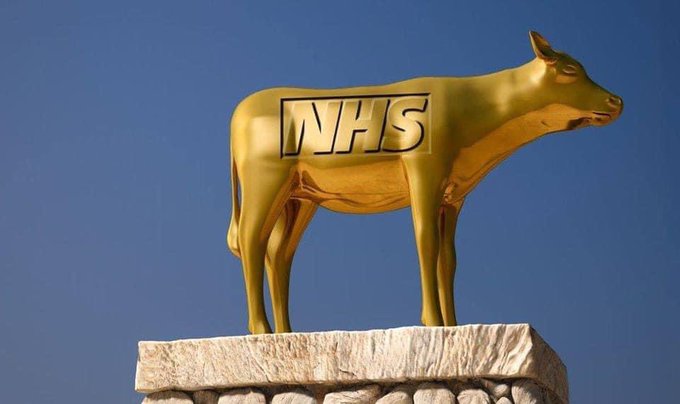
Spot on there Mr Lyon. The NHS has an effective monopoly on healthcare in Britain. Generations have grown up being told by NHS propagandists in Government and without that the NHS is fabulous, staffed by ‘angels’ and can be relied upon. There are many who have been propagandised to worship the NHS and because of that have not made alternative healthcare provision for either themselves or their families. There are also many other Britons who are in too precarious a financial provision to be able to afford the private care or the private health insurance premiums that is available. The British people are trapped, often through no fault of their own, with having to use NHS services, even though they are often awful.
I completely agree with Mr Lyon when he said that the NHS is a example par excellence of ‘producer capture’ where an organisation operates not in the services of its customers but in the interests of its staff and management.
Mr Lyon continued:
“The long-idealised and venerated NHS has become a totem to producer capture, a manifestation of unresponsive, bureaucratic top-down direction in which the views of patients seem to matter rarely and for very little.”
The nature of the NHS and the nature of how it is funded and run is almost guaranteed to produce an entity that can get away with not giving a toss about its customers or their needs or concerns as it is unlikely that in Britain the customer has any alternative readily or affordably available.
Britain and Britons deserve better than the NHS. That doesn’t mean that we need to go for a full fat nearly entirely private system as operates in the United States but there are other more efficient systems that are more responsive to customers such as those found in Continental Europe and in places like Israel.
Please read the entirety of Mr Lyon’s very thoughtful piece via the link below:
https://thecritic.co.uk/how-can-the-nhs-treat-complaints/





Be the first to comment on "Imagine a healthcare system that treated its patients like dirt. No need to imagine as Britain already has one."