
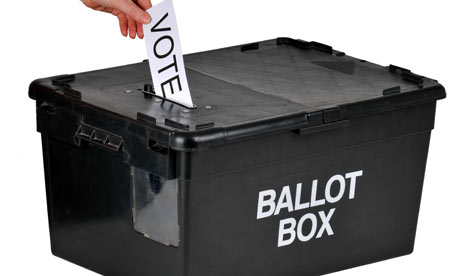
On Thursday May 7th Britain had a series of elections, not a General Election of course, that’s not due until 2029, but elections for councillors to run local authorities in England and for members of the Welsh Assembly and the Scottish Parliament. In Scotland the election returned a win for the Scottish National Party but not an absolute majority with Reform entering the Scottish Parliament for the first time with 17 seats. In Wales Labour were completely shafted and lost their century long grip on Welsh politics to the Welsh socialist nationalist party Plaid Cymru and to Reform who are now in second place after Plaid.
If the rise of Reform in Wales and Scotland is astonishing on its own, bearing in mind these countries histories, then what happened in England is even more astonishing. There was a complete collapse in Labour’s votes. Areas like Manchester where Labour were once very strong now have only a very small representation there with their council seats going in large part to Reform but also to the Greens and to a lesser extent the Liberal Democrats. In the City of Birmingham the results were just as staggering. Reform is now the largest party on the council with Labour which has governed the city for most of the council’s existence in its current configuration, being pushed into third place.
Reform took large parts of the county of Essex from the Conservatives and are now the largest part of the council. This was to be somewhat expected as Reform support is generally solid here probably being seen as much more aligned with the residents’ views than the Tories who have long governed this county. One place where Reform did well and which was a surprise that they did so is Bradford. Reform got 29 seats there with the Tories in second place on 18. Labour were kicked down from 47 to 17. It’s no overall control for the first time in years but Reform can’t govern on their own they would need to work with the Tories and they could still be outvoted by a coalition of The Greens, Lib Dems, Labour and the independent councillors. However, for Reform to jump from zero seats to 29 is utterly amazing.
But Reform was not the only big winner in these elections, The Greens who have now seemingly all but completely abandoned environmentalism and instead are now a far left/Islamic party, managed to take the mayoralty of the London Borough of Hackney from Labour. They also did well in the London Borough of Southwark turning the borough, which has been Labour since the borough was created in 1965, from Labour to no overall control, because of a very strong performance of the Greens.
The Greens managed to get 587 seats overall across the England and Wales an increase of 441 seats. I believe that it is probably less than the Greens might have got were it not or some of Zack Polanski’s party being exposed as deranged, unserious and dedicated more to Jew hatred than to the environment. There’s going to be a lot of new Green councillors who might have got elected because of ‘Palestine’ or ‘taxing billionaires’ who are now going to have to manage stuff like emptying the bins, running social care and much more. They are going to find out that governing is not going to be as easy as getting elected and they will share this plight with many of the new Reform councillors.
But seriously though, the Greens are an absolute horror show. Their embrace of some quite extremist Islamic elements should be a cause for concern as are their hyper-progressive policies on issues such as the economy and gender. It’s a worrying issue that a party that has so many bad aspects to it, the support for Islamism and the mass murderers of ‘Palestine’, the economic illiteracy, the support for the increasingly discredited gender ideology and fully open borders, has got so many seats. It’s also a party that has had two of its candidates arrested in the run up to the election. They were arrested and accused of publishing articles promoting Jew hatred that in my view may, based on what has been reported, have crossed the line from being ugly but still free speech into credible incitement to violence and the support of Hamas which is illegal in the UK. One of them published an article showing support for Hamas, which is a proscribed terrorist organisation in the UK and another publication from a different Green candidate included a call to ram vehicles into synagogues. A direct call for violence and one that is credible in the light of recent events, is serious, so serious in fact that it is a form of speech that is not counted as free speech even in jurisdictions where free speech is sacred such as the United States.
I suspect that not all of the Greens new voters came from the Muslim community or from organised Islamist voting blocs but also from the sort of middle class Left that has previously been a mostly Labour vote. We’ve seen what the middle class Left have done when given a part in governance in places like Bristol and Brighton. Bristol might have been rough in parts but the Greens have managed to turn the whole city into a crime and communism infested shithole. In Brighton they managed to turn a faded but lively resort, which Private Eye used to call ‘Skidrow on Sea’, into a byword for incompetence, ideological mismanagement, transgender cult promotion and waste. If you live in an area that is now controlled by or heavily influenced by the Greens then expect increased costs, small business killing traffic management schemes, political virtue signalling and quite possibly, because of the current make up of the Greens, a whole lot more of the intimidating and violent ‘Palestine’ demos that the Greens love to support. We can expect much more of what many people do not want nor need coming from the Greens.
Another sort of winner in these elections that may become a problem for the future is the rise of the mostly Islamic independents grouping. They did well in Oldham and now have ten councillors although Reform have 29. Neither the ‘Muslim first’ Oldham independent grouping nor Reform have a majority to govern. Labour can’t, not even if they join up with the Tories, Lib Dems and the sole non-Muslim named independent. There appears to have been a mass rejection of Labour from both the Muslim and non-Muslims of Oldham with the vote of the Muslims going to this new communal party of independents and the vote of non-Muslims going to Reform.
Oldham is looking like it could be a test bed for a new kind of politics where sectarianism is a major factor in how it is going to be governed. With no party able to run the area on their own or in coalition with a similar party things could get messy. The only way for a stable government there would be for Reform to go into coalition with Labour to freeze out the independents but that would mean working with a Labour Party that locals have, for various reasons, rejected. Reform really have got their hands full in Oldham and I’m interested to see what occurs there with regards to how Oldham is managed. It will be a massive test for them.
But the rise of religious and sectarian independent groupings should be a worry. It’s never good when electoral politics is decided on reasons of race and or religion. This is the politics of Ulster during the troubles or of Lebanon prior to and after its gruesome and long lasting civil war. This is the politics that I warned my far Left friends about around the turn of the century. Whilst those who back then supported the Socialist Workers Party (SWP) saw radical Muslims as allies on the road to socialist revolution, I on the other hand saw it as the SWP playing a very dangerous game. I told that that politics based on race or religion is ultimately poisonous, that this sort of politics did not equate to the sort of equality that my far left friends said they supported and warned them that they were importing the politics of Ulster during the height of the Troubles into places like London. Sadly it may yet be that my warning may be proven to be correct although I hope I’m wrong.
Now onto the losers in this historic local government contest.
Whilst local elections often see the party that is in national government punished by the electorate at local council elections, the scale of this year’s defeat for Labour is enormous. Councils that have always been Labour or mostly been Labour dominated fell either to opponents or to no overall control. Across the country Labour lost 1496 seats whilst Reform gained 1453. Labour are now at 1068 councillors which is perilously close to the sub 1000 mark. These elections have been a national rejection of Labour which was to be expected based on historical election data but the scale of this rejection and the areas in which they’ve been rejected in is unprecedented in my lifetime.
Also down were the Tories but they were not as badly hit as Labour. They lost over 500 seats and several councils that have traditionally voted Tory. Much of the losses that the Tories suffered came from voters choosing Reform. The result is not a complete disaster for Kemi Badenoch’s leadership but she should sit down with the psephologists and work out why this has happened. One answer is that there’s been a turning away from the Big Two political parties towards Reform on the Right and the Greens on the Left. Labour suffered greatly from this phenomenon in this election and it is something that has also afflicted the Tories. This result shows that the Conservative Party is still being blamed for it’s economic and social failures in areas such as migration, energy and social policies.
Even though Ms Badenoch is a ‘new broom’ the party is still tainted in the voters eyes by the migration Boriswave, the Tories enthusiasm for unreliable renewable energy, state encroachment on people’s lives, poor economic management, the Tories perceived capitulation to various identity politics activism such as with Trans and other identity politics strands. Whilst I am in agreement that David now Lord Cameron needed to, in the context of the time when he first became leader, embrace some of the liberalism that had grown in British society such as public opinion being more favourable towards LGB people for example, some of what the Tories did and what they ignored went too far. Neither Lord Cameron nor Theresa May or Boris Johnson or Liz Truss or Rishi Sunak knew when to call a halt to some of the extremes of identity politics that were being promoted in the party, in the public sector such as the Civil Service and state sector entities such as the National Health Service (NHS) when maybe they should. For example: I might have expected that the Tories of all people would have listened to the thousands of women in Britain who asked reasonable questions about their sex based rights in the context of a rise in the ideology of gender identity. The trouble is the Tories did not listen. They were woefully slow (with a few honourable exceptions) in recognising the threat to women’s rights and safety and the safeguarding of children and the degradation of such that we can now all see has been the result of the Tories amongst others pandering to the cultists of gender identity.
Voters sometimes have long memories and this is part of the reason in my opinion why the Tories took the hit that they did in these elections. As much as the voters hate the Labour Party it wasn’t enough to get them to vote Tory which is something that should concern Ms Badenoch and her team. She and her team need to study these election results and work out where to go from here. The Tories didn’t do too terribly but it’s not a ringing endorsement from the electorate. It’s not ‘dump the leader’ time as much as it is with the Labour Party but it’s still not as good as they should be doing. If the Tories want to rebuild then got to win back the voters they’ve mostly lost to Reform. However to do this Ms Badenoch is going to have to take on the ‘Red Tory’ and Lib Dems in blue rosette factions of the party and that may or may not be achievable either before the next cycle of local elections in England, Wales and Scotland to be held in May 2027 or before the next General Election in 2029. If Kemi Badenoch cannot present a solid enough plan to win back the lost voters at these elections because she is being blocked by the ‘Red Tory’ contingent then the Tories might be in deeper trouble than they are now.
Well, that’ the big parties and the two main challenger parties discussed so now I shall look at the undercard for this electoral bout. There’s been one big story when it comes to the undercard and that is Rupert Lowe MP’s Restore Britain Party front group Great Yarmouth First winning in all ten seats that they contested. From what I can gather they really did put the work into getting their vote out. However they have only got ten seats out of a council that has 39 seats. It’s impressive but not that impressive. Restore supporters have been talking up the performance of the Restore front group candidates after this election but I’m not sure what level of support they can get outside an area where they are very very strong and strong because the local MP is popular. As I said in my recent article with my criticisms of Restore, not every party with strong local support can spread out and get support elsewhere. I said that if the Communists could not do that in the 1930’s with the backdrop and recruiting agent of the Great Depression then the same may apply to Restore.
As with the new Green and Reform councillors, the Restore councillors will now have to grapple with the reality of elected office as councillors at least even if not in charge of the council. We’ll see if their new councillors can manage the nitty gritty of council life or the complexity of some council’s systems? If they are up to the jobs they’ve been elected to then maybe this could be a base or further growth but it’s equally likely that, like Reform and the Greens, that Restore has some in it who are not up to the job. I’ve not been overly impressed with Restore which has become a bit of a Rupert Lowe personality cult with even thinner policy offerings than Reform. I’ve certainly not been impressed by the amateur hour supporters some of whom are little more than slogan chanters, which is appropriate for a party that I believe is little more than slogans at this stage in their game with others being too tin foil hat adjacent than I’m comfortable with.
Things don’t look good for Restore. Not 48 hours after the local elections where they gained their seats there’s been internal public arguments about who can speak at what meeting and it is looking like the Restore Britain party is as much in danger of falling into purity spirals as parties of the Left are.
Barring a miracle of workable policy formulation, better party discipline and vetting of members and the creation of a sensible growth structure I give the Restore Britain a 25% chance of disappearing up their own arses by 2029. They might yet transform by then into the British nationalist equivalent of the Popular Front of Judea from Monty Python’s Life of Brian with Mr Lowe if he’s still in politics, being the sole Popular front member.
My own choice of party the Social Democratic Party managed to hold onto their small number of councillors in Leeds but didn’t do that well elsewhere. However in their favour they did stand more candidates at this election than they’ve done at previous local elections. Maybe the twist towards a multiparty situation rather than a political duopoly might advantage the SDP in time? Who knows. I support the SDP because of my conscience, they are reasonable where others might not be.
It wouldn’t be an piece on here about the undercard in UK elections without taking a look at the once very loudly trumpeted Heritage Party. The leader of the Heritage Party David Kurten took what could have been a useful electoral vehicle for moderate social conservatives and turned it into a sump for tin foil hatters and those who share Mr Kurten’s very proscriptive views on architecture, abortion and much else. As expected the Heritage Party did very very badly and it’s probably likely that they did as badly as they did in a by-election in 2023 when they came a long way behind the Monster Raving Loony Party. This party launched with great fanfare when Mr Kurten started it when he parted company with UKIP but it has not lived up to the hype that some gave it. It is a zombie party with no proper structure, members or electoral support. It’s just Mr Kurten and those who adore him and is now little more than a tiny and insignificant personality cult of a party.
There was also disappointment to be had in these elections for the members of the ‘Jew hatred, Jihad and Jeremy Corbyn Party or ‘Your Party’ as they like to be called. This is another party that has made a lot of noise, got a lot of bodies onto the street on occasion but have failed to turn that claimed support into electoral success. In a ward in Salford for example Your Party managed to gain only 66 votes, the bottom of the electoral pile and behind the Liberal Democrats on 195 votes. This is looking increasingly like an ‘ex Party’ just like the various Trade Union and Socialist Coalition parties that stand in elections. They have no broad appeal outside of those who like Jew hating, Jihad and Jeremy Corbyn and that is a menu that doesn’t go down well with the British people. I don’t see this coalition of Jihad fans, Marxist extremists and performative ‘Queer’ activists lasting that much longer due to the inherent contradictions between Your Party’s ideological factions. It’s possible that many of the fraggles who might have chosen Your Party may well have opted for the Greens as the Greens looked, correctly it appears, to have a more electable class of fraggle. The Your Party revolution has not just not been televised, but looks to be postponed for an indefinite period.
To conclude this piece: These were very important elections because they show the political map shifting like a dune in a desert in the wind. The two big parties took the biggest hit, with challenger parties doing well and the Lib Dems not doing as well as they might be expected to do when there’s dissatisfaction with the Big Two parties. Britain’s politics is shattering. We are looking at a once in a century realignment similar to how the Labour Party replaced the Liberal Party as an alterative to the Tories at the beginning of the 20th century. How this will eventually resolve itself and what shape the post Big Two politics might look like is anyone’s guess. We might end up with a situation where Reform replace the Tories as the right wing choice and the Greens hovering up left wing voters. Much may depend on how these challenger parties fare now that they are in positions of authority in local authorities. If they govern well then they could build on that success and become replacements in some areas for the Tory and Labour parties but if they govern badly then all bets are off. As well as some very new and inexperienced councillors in these challenger parties having to take on some big jobs, in some cases dealing with cities that are effectively bankrupt or about to be bankrupt, there’s also the spectre of what the sectarian parties will do. Will they work for everyone or just their sectarian cause? This is an election that has as well as shown us the success of Reform and the Greens, also given us a whole load of unknowns.
I think that in local government and maybe later on in national government, we are about to live in those prophesied ‘interesting times’ in politics. Whether it will ultimately be good or bad I don’t know and find it difficult to predict, things could go any way including very bad. What I will say is that watching the political scene in the UK at the moment is like watching Air Crash Investigation on my phone whilst flying in a DC3 with one engine out and the pilot inhaling Evo-Stick from his oxygen mask. You know the plane is likely to crash, you are looking at previous similar crashes elsewhere from across the world’s nations and you can see and feel the ingredients coming together for the DC3 you are in to plummet to the ground, accumulating all around you. What will emerge from Britain’s previous party political system is anybody’s guess. Will the Tories win back the new Reform voters and bury the Red Tory faction that is unpopular? Will Labour go back to its long buried roots in the working classes or have they damaged themselves fatally? Or will we have new parties doing the same political jobs and occupying similar ideological positions as the Tories and Labour once did? For the foreseeable medium term future Britain’s politics is in somewhat of a flux.
Link
Criticisms of Restore Britain’s policy and structure and conduct.



What happens with Restore is going to be interesting, both for the party itself, but also more broadly.
Was an interesting approach for them to fight a narrow, hyper-local campaign, which seems to have paid off with their strong victories there. Quite a lot to be said for building momentum, even on a relatively small scale – if they’d tried to fight a few hundred seats it may not have been as successful. Instead they get to point to a 100% record this time and say “look, we can win”. However, they ultimately need to scale that – that’ll be the proof of the pudding – can they replicate those results outside of Great Yarmouth?
And that leads on to how they’ll affect other parties. Will they be popular enough to split the vote that might otherwise go to Reform? Will they at least act as a big enough centre of gravity to keep Reform from drifting towards the centre (given the number of ex-Conservatives in there, that might be necessary). Will they survive long enough to be the next big hope if The Blob sees to a future Reform government? Interesting times.
I agree that Restore did the right thing by fighting only where they were strongest and where they had a base. This seems to be also what the SDP are doing, but building a party bit by bit like this first locally and then more nationally or regionally takes a lot of time and effort. A lot might depend on how they work in local govt now. They are going to have to work with other parties and we will see how savvy they are politically. If the Restore councillors are shall we say less than stellar then all they’ll be is a shouty bunch with no power at all.
There is the argument that Restore might keep Reform honest by poking from the Right but at what cost? If they do this and split the right of centre vote then they’d let in a socialist. The centre isn’t always a bad place to be as its where the votes for those who are not particularly ideological but who are dissatisfied with the current political order are to be found. If Restore are going to bugger it up with their councillors then it will bode ill for them. I’m not a fan of Restore but if they’ve already got into internal purity spiral arguments with each other then it don’t look good.
Oh, absolutely on all of that. There’s a definite risk of them being just popular enough that they take too much out of the Reform vote. And there’s not much love lost between them that they’d cooperate…
I am going to be fascinated to see if they can scale the party big enough and quickly enough to be a legit national contender though. I have my doubts, but who the heck knows any more?
I agree that British politics is getting difficult to call not just with the undercard parties but the bigger ones as well. I worry about them diluting the Reform vote because Restore seem to be more of a spoiler party whose primary aim and opponent is Reform. That’s alright in a few places as happened in Gt Yarmouth but will split the right especially if Restore can scale their operation.
Mind you things might sort themselves out, Restore might end up recruiting all manner of headbangers and purity spiral types and by doing so put potential voters off. A few of these even a small party can tolerate without harm but get too many and Restore could quite well end up like the ill fated British Yellow Vests group, getting laughed at by tourists see https://www.fahrenheit211.net/2019/02/14/another-british-yellow-vest-washout/
The scaling is going to be the challenge – short of cloning Rupert Lowe 360 times, not sure how they can do that practically. Best case they’ve got 3 years and a couple more local election cycles. Probably enough time to become a problem for Reform without being a solution to what ails us…
If nothing else, you’re going to have plenty to write about for the next few years! Think this may be my first time commenting, but I do read regularly – appreciate your taking the time to write, always well considered and thoughtful.
Thank you very much for your kind compliments. Restore are not my cup of tea, Reform or the SDP more fit my bill but watching Restore is interesting because it could go one of two ways, they could become more organised with better thought out policies and less stunts in which case they might find a niche in some council areas or Parliamentary seats without doing too much damage to Reform or even a greatly reformed Tory Party. If they don’t do that then they might implode. It’s going to be an interesting watch.