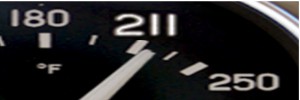

There’s been cyber attacks on commercial freezers across Europe and it’s causing chaos. Right across the EU from France to Estonia cyber attackers have taken command of commercial freezers in shops and turned them onto defrost mode. This raises the temperature of the freezers in some cases to 50 degrees Celsius and spoiling the food that these freezers contain.
This latest attack, which has been reported by Sky News, is going to cost millions of pounds to put right. Not only is the spoiled food going to have to be replaced in the individual shops but steps are going to need to be taken and taken pretty quickly and effectively, to prevent this happening again. There could be an even worse situation occurring if not only the freezers in shops were attacked but the freezers and chillers in distribution centres were similarly attacked.
Networking commercial freezers sounds like a brilliant idea. A whole chain of shops freezers can be centrally monitored for performance remotely and periodical tasks such as defrosting can be done without any member of staff having to scrabble around the back or underneath a freezer in order to find the main switch. Networking equipment like this can save an enormous amount in staff costs in a part of the retail sector where margins can be extremely thin.
It’s all wine and roses until something goes badly wrong and it appears to in this case. Networking freezers has given hackers, whoever they may be and they could be from a multitude of causes, a way into this system to cause havoc. These systems have not it appears been built with robust security but then maybe those who put these systems together never thought that such security might have been needed?
Here’s how Sky News are reporting this story@
“Cyber hackers have targeted fridges and freezers in supermarkets in several European countries including Ireland – causing temperatures to increase and food to spoil.
Ireland‘s third-largest supermarket chain, SuperValu, said its refrigeration systems limited to a specific model in 13 of its 223 stores had been affected by a cyber incident.
Chilled and frozen products have been removed from sale, it added.
Sweden’s cyber security centre said it was responding to several incidents in ICA and Co-op grocery stores, that had caused freezer temperatures to rise sharply overnight on Monday.
Meanwhile, fridges and freezers in dozens of stores across Belgium and Luxembourg operated by Ahold Delhaize were also hit by a cyberattack, the Belga news agency reported.
Carrefour said 15 out of its 700 shops in Belgium suffered problems, and five Spar stores operated under the Colruyt Group in the country also had their fridge systems attacked.
IKEA said that one of its outlets in Belgium had been impacted, but it could not rule out more being affected.”
The report added that this is the second cyber attack on commercial freezers in Europe in a month.
I think that it’s likely that we will see more of this sort of cyber attack in the coming months and years. Engineers have built systems that have by accident have significant vulnerabilities in them. There are also people willing to put in the time and computing effort to try to discover what these vulnerabilities are and exploit them.
I have no idea who could be behind this cyber attack but I will hazard a guess that it is a long list including hostile nations, terror groups, blackmailers and many others. Now that this vulnerability has been discovered the race is on now to prevent these systems from being attacked in a similar manner. It’s going to be a long hard slog to protect all these individual freezer systems and their controllers from future attack. Patching this vulnerability is not going to happen overnight and it may well be the case that we will see more of this sort of attack until the freezers and their control systems can be hardened enough to protect from hackers but still retaining their functionality.
My great worry is that the attacks on freezers are just the start. The attack on freezers might be a probing attack by an adversary, whether state or non-state on systems in Europe, with a much more damaging attack later on coming to more critical and crucial systems such as energy, healthcare, water, sewage or defence. We might be entering a period where systems that have been set up for convenience and fast data sharing might become the West’s Achilles Heel.
Link
Sky News report on freezer attack




Be the first to comment on "Networked freezers, not turning out to be the great boon that might have been imagined."